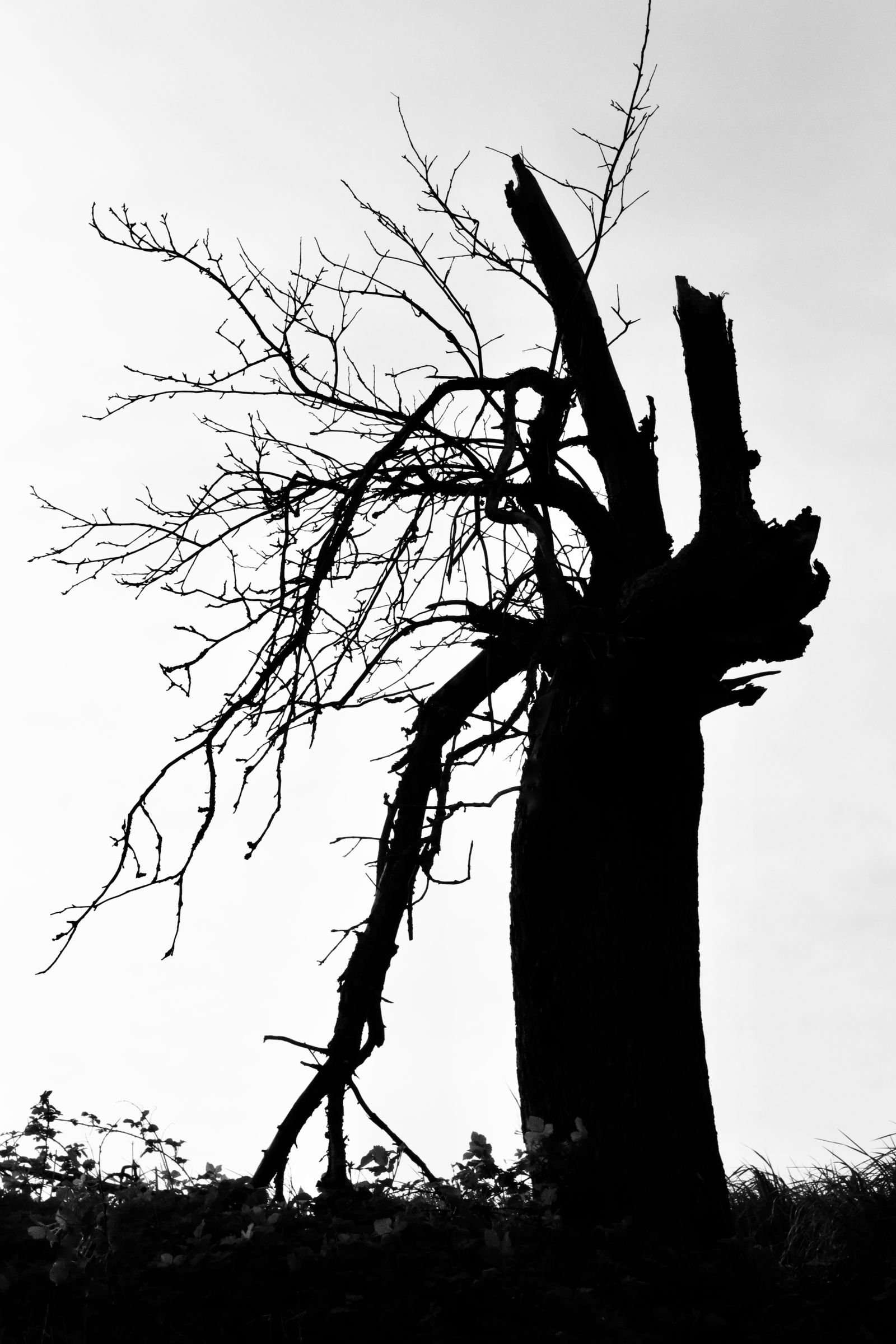
Most people look up. Look down first. The bottom three feet of trunk and the soil around it tell you more about whether a tree is about to fail than the whole canopy does.
Is it dead? The scratch test
Scratch a small twig with a thumbnail. Green just under the bark means living tissue. Brown and dry all the way through means that branch is gone. Test twigs from three or four different parts of the canopy, because one dead branch is normal and a whole dead side is not.
In Austin the honest test is spring. A tree with no leaves by late April, when the live oaks have flushed and everything else is out, is not dormant. It is finished. Do not write one off in the middle of a brutal August, when healthy trees drop leaves to save themselves and look terrible doing it.
Other signs it has died: bark falling away in sheets with dry wood underneath, shelf fungus on the trunk, and woodpecker activity in numbers, since they are after the insects that colonise dead wood.
The four defects that matter
Soil that has moved. Cracked or heaved ground on one side of the base, usually the side opposite the lean. This means the root plate is lifting and the tree is already failing. It is the most serious sign on this list and it is the one people walk past. If you see it, keep everyone out from under the tree tonight.
Decay at the root flare. Shelf fungus or mushrooms growing out of the base means the fungus has already consumed far more than you can see. A screwdriver that pushes into the trunk with little effort is telling you the same thing.
Included bark at a union. Where two leaders grow up tight against each other, bark gets trapped in the join instead of wood, so nothing structural is holding them together. Bradford pear is notorious for it, and plenty of multi-stem live oaks in Austin front yards have it too. A crack at that join is a tree about to become two.
A lean that changed. Trees grow at angles and a lean of thirty years is usually fine. A lean that is new, or has increased this year, is not. Photograph it against a fixed reference such as a fence post and compare in six months.
Hollow is not automatically fatal
Trees carry load in their outer wood, so a hollow trunk with a thick sound shell can stand for decades. The working rule is that once the solid shell is thinner than about a third of the trunk radius, the safety margin has gone.
Combinations are what worry us. Cavity plus lean. Cavity plus fungus. Either of those is a different conversation from a hollow trunk on an otherwise upright, healthy tree.
The Austin pattern nobody expects
Here is what we see over and over across Central Texas. A long drought damages the root system. The tree looks acceptable for another year or two, because a mature tree has reserves. Then the first genuinely wet, windy night arrives and it goes over.
The storm gets blamed. The drought did the work, two summers earlier. That is why deep, slow watering at the drip line through an Austin summer does more for a mature tree than anything anyone can sell you, and why a tree that came through a drought looking fine is still worth a look.
The soil makes it worse either way. East of I-35 the clay swells and shrinks, shearing fine roots year after year. West of I-35 there is often a foot of soil over limestone, so anchorage is shallower than the canopy suggests.
Does it actually need to come down
Two questions. Is there a defect, and is there a target underneath it? A hollow cedar elm in the middle of a field is wildlife habitat. The same tree eight feet from a bedroom is a hazard.
Some defects can be managed rather than removed. Deadwood over a patio can be pruned out. A split union on an otherwise healthy tree can sometimes be cabled. Root plate movement and trunk decay cannot be fixed by anything.
And if it is genuinely finished, take it down sooner rather than later. A dead tree gets more expensive to remove every year it stands, because the wood degrades until rigging cannot be trusted and a crane becomes the only option. See dead tree removal and hazardous tree removal.
Not sure what you are looking at? Send one photo of the whole tree and one of the base and we will give you a straight answer, including when the answer is that it is fine. We cover Austin, Round Rock and eight more cities.